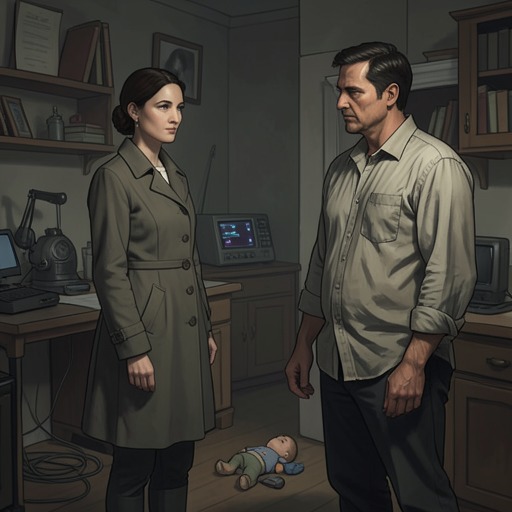
Nathaniel Sabich
Presumed InnocentNathaniel Sabich, usually called Nat, is the eight-year-old son of Rusty Sabich and Barbara Sabich. His distracted energy, charm, and physical gifts make him an imperfect fit for adult expectations, but his steadfast presence becomes one of the most consequential forms of support Rusty receives during the murder trial. Nat’s loyalty does not shield him from the crisis: the possibility of losing his father, and the distance imposed by camp, bring the family’s private strain into his own life.
Identity and Early Character
Nat is introduced at a spring tee-ball game, playing in the second-grade Fathers/Students League. When a hard-hit ball lands beyond the Stingers’ defense, he initially seems not to notice it. He reaches it just ahead of another player and throws it back toward the infield, but too late to prevent the batter from scoring. Rusty calls out to him, and Nat responds with a broad, gap-toothed smile. The episode establishes both his inattention and his ease with himself: he admits that he lost focus, while the adults around him laugh rather than treating the lapse as a serious failure.
Rusty describes Nat as sensitive and kind, but also wild, easily distracted, and governed by his own schedule from infancy. When Rusty reads aloud, Nat turns the pages ahead to see what comes next; at school, he has long been a problem. His charm and physical ability help him through difficulties that concentration might have prevented. Rusty also notices his striking dark eyes and regular features, which differ from his own. He usually attributes Nat’s looks to Barbara’s family, though he privately wonders whether Nat may resemble his paternal grandfather, Ivan Sabich. That resemblance worries him less as a matter of appearance than as a possibility that beauty might foster arrogance or cruelty; it remains Rusty’s apprehension, not a judgment about Nat’s character.
Growing Awareness and Loyalty
By the summer league, Nat appears to be changing. The games remain disorganized, with fly balls baffling the young players, but Nat begins to show more attention to the way he plays. Rusty notices that after hitting, Nat looks up as he rounds first base before running toward second. The important change, in Rusty’s view, is not simply that Nat imitates televised players, but that he has begun noticing style and how conduct may be read as a sign of character. Barbara also observes that he has become more particular about his clothes. Rusty welcomes this emerging awareness while suspecting that it has been stirred by the public trouble surrounding his father.
After games, Rusty and Nat sometimes leave together instead of joining the other families. Since the indictment, ordinary conversation at the gatherings has become strained, and Rusty worries that his presence may burden the children as well as the adults. Nat makes no complaint about departing early. Rusty imagines the unkind remarks his son may face from other children, yet Nat continues to stay close to him: he pulls Rusty from the sofa to practice a baseball slider, accompanies him on evening errands, and walks with him through the woods between their subdivision and Nearing’s village green. His support is not expressed through constant reassurance. It takes the quieter form of choosing to remain beside his father.
One evening Rusty asks whether Nat is scared. Nat immediately understands that the question concerns the coming trial and whether Rusty will be released. He repeats what Barbara has told him: that the trial will allow Rusty to explain what happened and bring the ordeal to an end. Rusty is moved not only by Nat’s confidence but by his trust in his mother. He sees the family’s attachments as differently directed: he loves Nat most, while Nat adores Barbara. Mother and son share an intense closeness; Nat is especially willing to be held by her, and Rusty sees Barbara’s intelligence and private moods reflected in him. Their bond is evident in the distress Nat experiences when Barbara spends four days in Detroit visiting her friend Yetta Graver. During her absence Barbara calls twice a day, while Nat becomes miserable and difficult to settle at bedtime.
The Trial’s Effect on Nat
As Rusty’s trial approaches, his fear centers less on prison than on separation from his son. He listens outside Nat’s bedroom and tries to match his breathing to the rhythm of the sleeping child’s. Rusty understands his love for Nat as something too large to reduce to an inventory of physical parts. The thought that a conviction could take Rusty away from the remainder of Nat’s childhood is devastating to him. This anxiety belongs to the father’s perspective, but it also anticipates the harm the trial causes the boy.
During the proceedings, Nat is sent to Camp Okawaka near Skageon, where he is expected to stay for the three weeks projected for the trial. The arrangement does not protect him from worry. Barbara later tells Rusty that the camp director has called several times because Nat wakes screaming twice each night. At first the director treated the episodes as an adjustment to camp; he now considers the problem acute and recommends sending Nat home. The calls reach Barbara during lunch recesses, while Rusty is occupied with his lawyers and cannot speak with his son. Nat’s distress makes clear that the trial’s consequences extend beyond the courtroom: the uncertainty about Rusty’s fate is intensified by Nat’s physical distance from both parents.
Separation and Continuing Family Ties
After Rusty’s acquittal, father and son begin to recover through ordinary time together. Rusty keeps Nat out of school for a day and takes him fishing from a canoe. They say little, but Rusty is content simply to be with him and believes Nat understands that contentment. The quiet outing contrasts with the turbulence of the preceding months, when Rusty’s attention had been consumed by fear and public disgrace. Their companionship becomes part of his gradual return to everyday life.
The family’s later circumstances are less settled. Rusty and Barbara separate, and Nat stays with Rusty for the time being, only until Barbara gets established in Detroit. When Rusty takes him to the airport, Nat is allowed to board first. Rusty wants to accompany him onto the plane, but Nat refuses; from the doorway, Rusty watches him walk down the jetway alone in a dark blue NFL parka, absorbed in his own thoughts and not turning back to wave. The moment combines the boy’s independence with the father’s pain at being left behind. Rusty’s wish for the life he had underscores how much has changed, even after the criminal charge has ended.
Rusty later travels to Detroit on many weekends to see Barbara and Nat. When his work prevents a visit, Barbara sends Nat to him. During one conversation, Rusty explains that Nat is with him only temporarily until Barbara is settled; later he says that Nat gives his mother someone who genuinely cares for her. He believes separating them would be the worst thing he could do to either one. Even when Rusty and Barbara are no longer living together, preserving Nat’s closeness with his mother remains a central consideration. Barbara and Rusty eventually reach a tentative reconciliation and remain married for the time being, a fact that comforts Nat even though neither parent expects the arrangement to last.
Narrative Significance
Nat’s role is defined less by action in the legal case than by what his presence reveals about its human cost. His father’s account repeatedly returns to small acts of companionship—the walk home from a game, the evening errand, the shared fishing trip—and sets them against the possibility of prison, the camp nightmares, and the airport departure. These moments show that a child can understand the central threat without understanding every adult circumstance around it. Nat grasps that his father may not come home, believes Barbara’s reassurance, and remains loyal to Rusty while retaining his distinct, sometimes elusive independence.
His closeness to Barbara also shapes Rusty’s choices after the trial. Rusty does not want to expose her or risk taking Nat from her, even as the marriage breaks down. Nat is therefore not merely the object of his father’s fear of separation; he is a person whose bond with each parent constrains what Rusty is willing to do. By the close, Nat travels between his parents while their relationship remains uncertain. The arrangement offers continuity, not restoration: he still has both parents, but their family life has been altered by the trial and its aftermath.